Science
At Cowes Enterprise College the Science curriculum is designed to foster a curiosity about the world around us, enable citizens of the future to understand and explore the world effectively and to be able to use scientific principles to both answer and ask questions about the universe and everything in it.
Key Stage 3 (Years 7, 8 and 9)
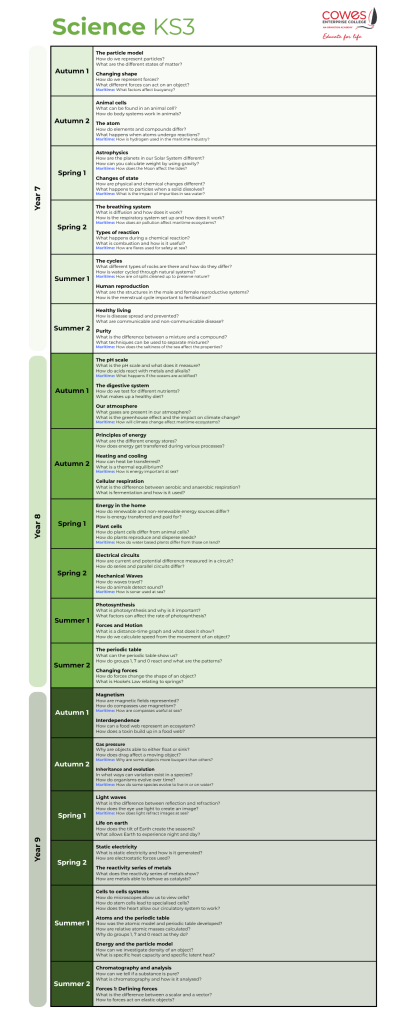
Our KS3 Science curriculum helps students understand the world around them through the study of biology, chemistry and physics. We want students to develop a secure understanding of the key scientific concepts that explain living organisms, matter, energy and the universe, whilst also understanding how scientific knowledge is developed and refined through enquiry and evidence.
The curriculum is carefully sequenced to build students’ knowledge of science and how to be a scientist. Students learn the fundamental ideas of science through themes that are revisited and developed over time, allowing them to make increasingly complex connections both within and across the scientific disciplines. Through practical work, investigation and critical evaluation of evidence, students develop the skills needed to think and work scientifically.
We aim to develop students’ scientific literacy by explicitly teaching the language of science, enabling them to communicate ideas effectively, interpret information critically and engage confidently with scientific issues. Students also explore the wider richness of science, including its impact on society, the environment and future technological developments, helping them appreciate the relevance of science in their everyday lives and future careers.
By the end of KS3, our intent is for students to be curious, knowledgeable and scientifically literate young people who can think critically, ask questions about the world around them and feel inspired to continue studying science.
Key Stage 4 (Years 10 and 11)
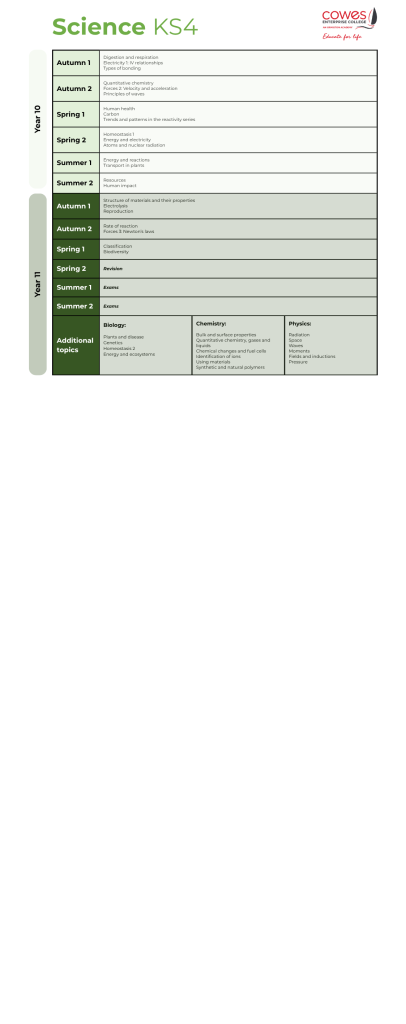
Our KS4 Science curriculum is designed to prepare students for success in GCSE Combined Science: Trilogy or separate GCSEs in Biology, Chemistry and Physics using the AQA examination board. Building on the strong foundations established at KS3, students deepen their understanding of biology, chemistry and physics while continuing to develop the disciplinary knowledge and mathematical skills required to work scientifically.
Students learn to apply their scientific knowledge to familiar and unfamiliar contexts, analyse evidence, evaluate claims and solve problems. Practical work remains an important aspect of the curriculum, enabling students to develop their understanding of scientific enquiry and the methods used by scientists to generate reliable knowledge.
Alongside securing strong outcomes in GCSE Science, our intent is that students leave school scientifically literate and able to make informed decisions about issues that affect their lives and society. Students gain an appreciation of the role science plays in addressing local, national and global challenges and develop the knowledge and skills that will support progression into further study, apprenticeships and a wide range of science-related careers.
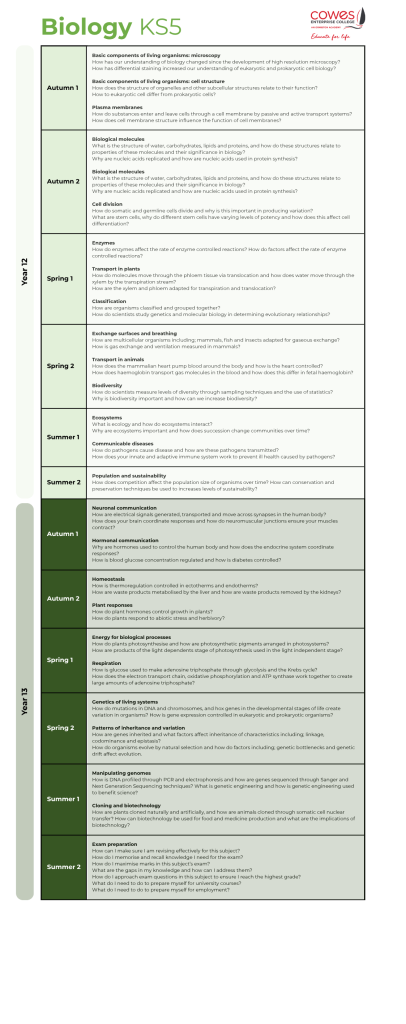
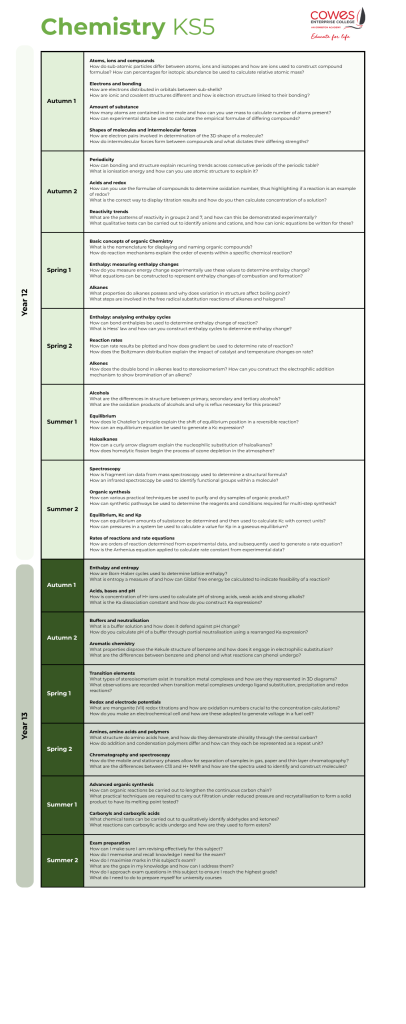
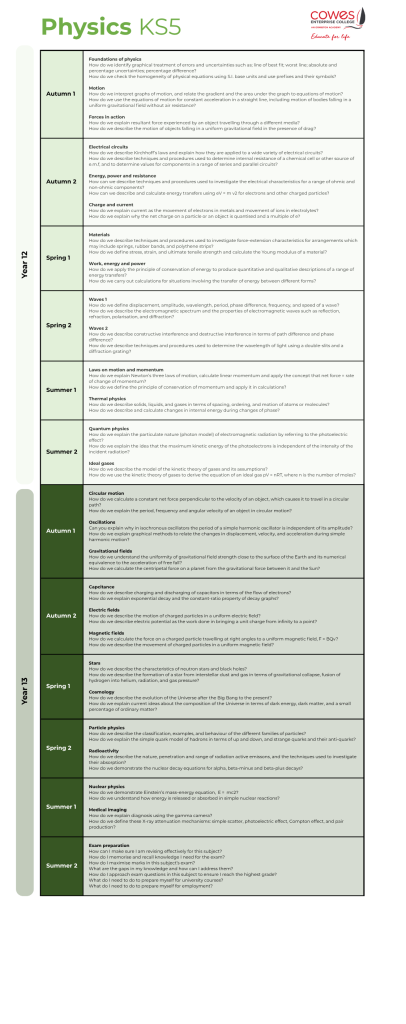
Sixth Form (Years 12 and 13)